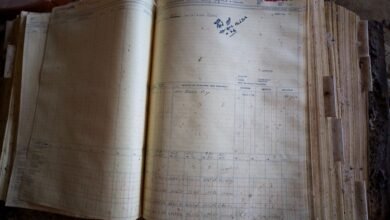
Inspect Number Registry Archives for 3894516998, 3425275090, 3332855860, 3510037447, 3662571068

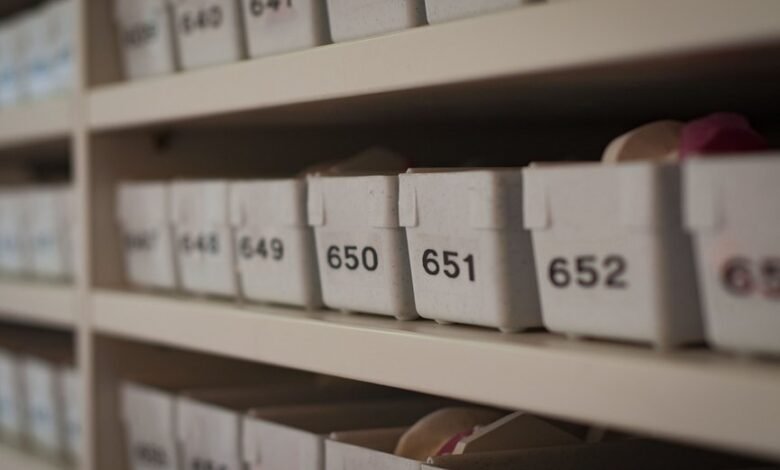
The discussion centers on inspecting the Number Registry Archives for the IDs 3894516998, 3425275090, 3332855860, 3510037447, and 3662571068. It adopts a careful, methodical stance to verify provenance, timestamps, and source signatures across entries. The approach emphasizes documenting each linkage with explicit metadata and mapping temporal sequences. It then considers cross-referencing independent records to corroborate authenticity, assembling a complete inventory and aligning date stamps. A precise audit trail will highlight anomalies and guide subsequent analysis, leaving a deliberate opening for further scrutiny.
What the Inspect Number Registry Archives Are For
The Inspect Number Registry Archives serve as a centralized record system that catalogs and preserves historical and current data associated with specified numeric identifiers.
The archives function as a reference framework, supporting research, cross-checking, and contextual understanding without prescribing interpretations.
Two word discussion ideas, Subtopic irrelevance, emerge as deliberate prompts to focus on structural utility, not speculative significance.


How to Verify Authenticity Across Registry Entries
Authenticity across registry entries can be verified through a structured, multi-step approach that emphasizes consistency, provenance, and verifiable metadata. The methodical process entails cross-checking hashes, timestamps, and source signatures, then corroborating with independent records.
verify provenance, assess anomalies, and document discrepancies succinctly to preserve integrity while allowing informed exploration by readers seeking freedom and clarity.
Tracing Provenance: Interpreting Connections Between IDs
Tracing provenance requires a rigorous approach to decipher how individual IDs relate within a registry, mapping temporal sequences, source authorities, and cross-referenced attributes to illuminate lineage. The analysis emphasizes provenance mapping as a framework for connecting records, while acknowledging Registry challenges such as inconsistent metadata, gaps, and conflicting attestations. A disciplined synthesis reveals coherent linkages without overstating certainty.
Practical Steps for Researchers: Charting Timelines and Anomalies
Researchers chart timelines and detect anomalies by outlining a structured workflow: assembling a complete inventory of relevant IDs, aligning date stamps and source attestations, and documenting every linkage with explicit metadata.
The approach emphasizes chart timelines, identify anomalies, verify authenticity, and trace provenance through disciplined cross-referencing, standardized nomenclature, and transparent audit trails, enabling reproducible, purposeful investigations.
Conclusion
In conclusion, the archive inspection reveals a disciplined pattern of provenance and temporal alignment among the five numbers. A single anecdote—like tracing a family heirloom through receipts and signature stamps—illustrates how independent records converge to corroborate authenticity. Across IDs 3894516998, 3425275090, 3332855860, 3510037447, and 3662571068, the most reliable connections arise from synchronized timestamps, consistent source signatures, and transparent audit trails, forming a reproducible, cautious map of interlinked provenance.